Featured sculpture
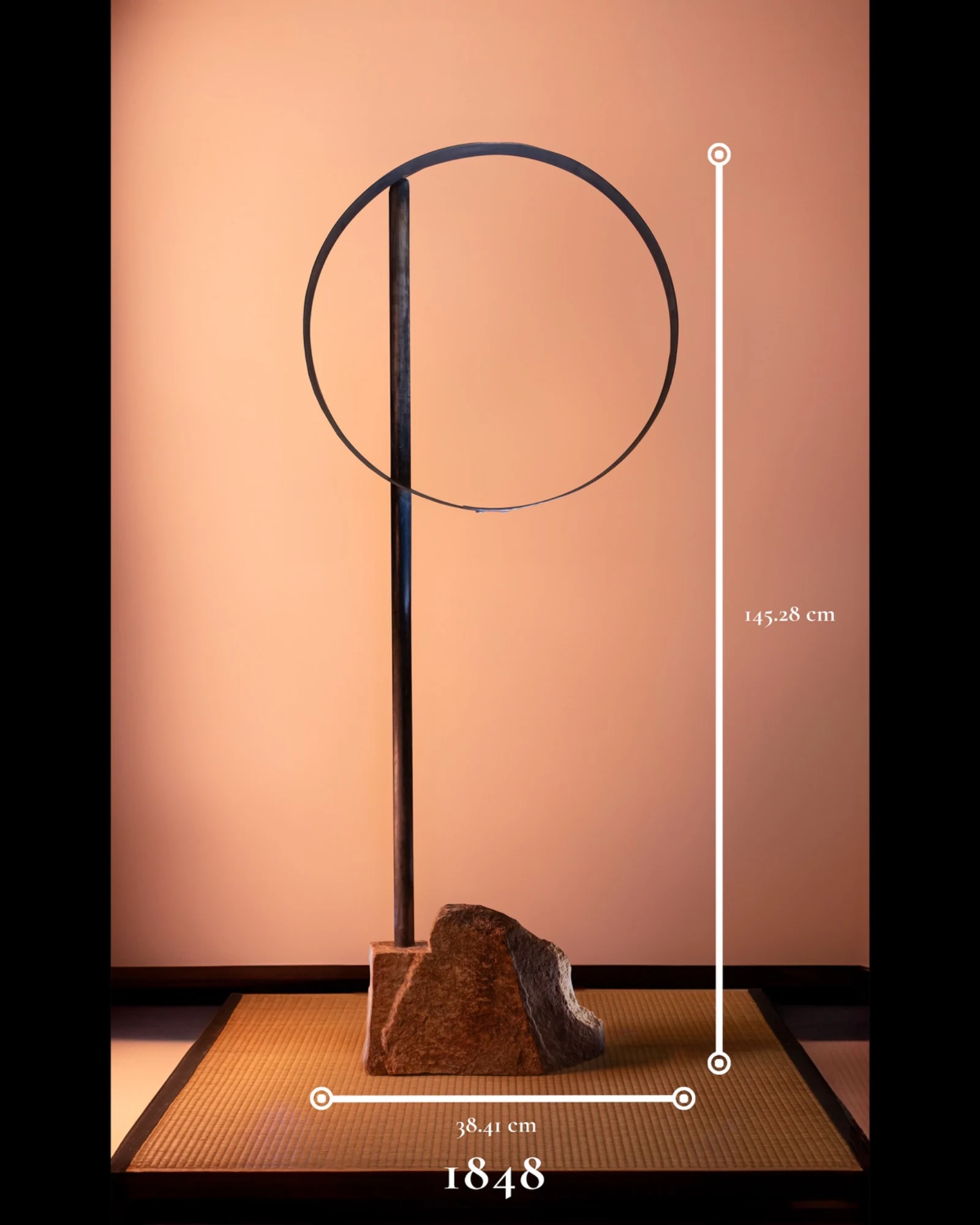
1848
A material meditation on rupture, possession, and memory in the Mojave Desert.
- Materials
- Stone, gun-blued whiskey hoop, blue steel pipe
- Dimensions
- 145.28 × 38.41 cm
Wall label
1848
1848 reflects on the year California became U.S. territory and the Mojave Desert entered a new era of settlement, extraction, and imposed ownership. A stone base honors the older Indigenous and geological memory of the desert, while the gun-blued whiskey hoop and blue steel pipe reference frontier mythology, violence, trade, water, and industrial occupation. The work asks what remains beneath history when land is renamed, claimed, and divided.
Sculpture treatment
Concept statement
1848 is a material meditation on rupture, possession, and memory in the Mojave Desert. The sculpture is built from three primary elements: a stone base, a gun-blued whiskey hoop, and a blue steel pipe. Each material carries a different historical pressure.
The stone base represents the older desert: geology, Indigenous presence, mineral time, and the Mojave as a living place before it was divided by treaties, borders, parcels, roads, and ownership documents. It is not decorative. It is the ground. It suggests permanence, memory, and the Native relationship to land that predates American settlement.
Rising from the stone is a blue steel pipe, an industrial support that feels both structural and invasive. It suggests wells, extraction, water control, fencing, mining, and the later infrastructure that allowed settlers, ranchers, soldiers, and developers to occupy the desert.
The focal point is a gun-blued whiskey hoop. The circular hoop becomes a symbol of containment: a barrel, a boundary, a trade object, a target, a halo, a wound. Its gun-blue finish links it to firearms, violence, preservation, and masculine frontier mythology. Whiskey evokes trade, intoxication, colonial exchange, and the myth of the West as something romantic, when in reality it was often brutal, transactional, and displacing.
The title 1848 refers to the Treaty of Guadalupe Hidalgo, the year California passed from Mexican control into the hands of the United States. But the sculpture is not simply about a date. It is about the moment land became paperwork, when ancient territory was absorbed into a new political system. In the Morongo Basin, that legal transfer did not erase Indigenous presence, but it marked the beginning of a new era of surveying, settlement, extraction, and forced transformation.
The piece holds beauty and violence at the same time. The blued metal is seductive. The stone is quiet. The pipe is blunt. Together they create a desert relic from an alternate history: part monument, part artifact, part warning.
Studio
Contemporary art shaped by the Mojave Desert, Japanese spatial restraint, industrial material, and psychological symbolism.
Yucca Bloom Studio develops sculpture, painting, and limited works from California’s high desert. The practice centers on tension: permanence and fragility, silence and disturbance, landscape and memory.
Contact